
Introduction
You’ve decided you want to invest in mutual funds. That’s a big and positive first step. But once you start searching for how to invest in mutual funds in india
The process can quickly feel confusing — especially if you haven’t fully understood how mutual funds work
KYC, platforms, direct vs regular, SIP, NAV — too many terms, too many opinions.
Many first-time investors don’t struggle because investing is difficult.
They struggle because they’re afraid of doing something wrong at the very beginning.
The good news?
Investing in mutual funds in India is much simpler than it appears — if you understand the process clearly.
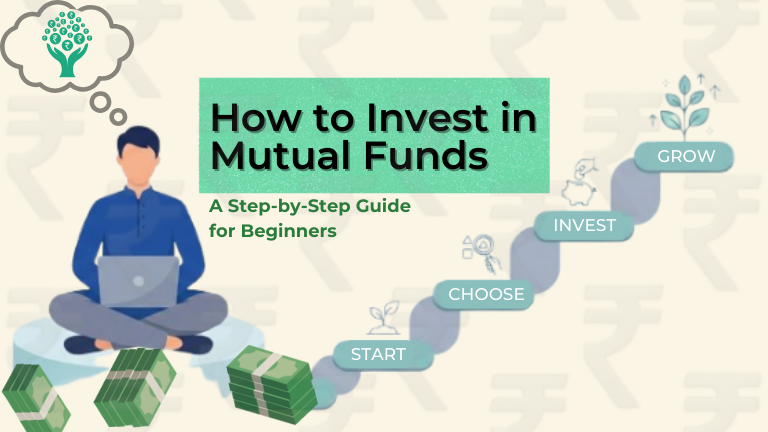
In this guide, we’ll walk through how to invest in mutual funds in India, step by step, in plain language.
No pressure, no sales talk — just clarity, so you can start with confidence.
Before you actually invest, let’s quickly understand who can invest and what you need to get started.
Who Can invest in mutual funds in india?
Almost anyone can invest in mutual funds in India.
If you are an Indian resident with valid identification and a bank account, you’re eligible to start investing.
Both salaried individuals and self-employed professionals can invest.
You can also invest:
- As an individual
- Jointly with another person
- On behalf of a minor (with a guardian)
For most first-time investors, the basic requirements are:
- A Aadhar linked PAN card
- A bank account in your name
- Completion of the mutual fund KYC process
That’s it.
No special background, no large income, and no prior investing experience required.
Once you know you’re eligible, the next step is understanding a few things before you make your first investment, so you start on the right foot.
Things to Know Before You Start Investing
Before you invest in a mutual fund, it’s important to get a few basics clear.
This helps you avoid common mistakes and invest with confidence.
Know why you’re investing
Are you investing for long-term wealth, a future goal, or just to get started?
Your reason matters more than the fund name.
Understand your time horizon
Mutual funds work best when you give them time.
Short-term expectations often lead to disappointment.
Be honest about risk
Some mutual funds fluctuate more than others.
Choose what you’re comfortable with, not what others recommend.
Start small and simple
You don’t need to invest a large amount or choose many funds at once.
Clarity beats complexity every time.
Once these points are clear, the actual investment process becomes straightforward.
Now, let’s walk through the step-by-step process to invest in mutual funds in India.
Step-by-Step Process to Invest in Mutual Funds in India
Step 1: Complete Your Mutual Fund KYC
Before you invest, you must complete the mutual fund KYC process.
KYC stands for Know Your Customer, and it is mandatory in India.
You’ll need basic details like your PAN, address, and bank information.
KYC can be done online or offline, and once it’s completed, you don’t need to repeat it for every investment.
Once your KYC is done, you’re officially eligible to invest in mutual funds.
Step 2: Choose How You Want to Invest
You can invest in mutual funds through different routes.
Most beginners today choose online platforms because they are simple to use and easy to track.
You can also invest through banks, distributors, or with the help of an advisor.
No matter which route you choose, the mutual fund itself remains the same.
Some investors also prefer taking guidance from a SEBI registered research analyst, especially when they want help with fund selection, risk alignment, or portfolio structure. This can reduce mistakes in the early stages of investing.

Step 3: Decide Between Direct and Regular Mutual Funds
Every Mutual funds come in two options — direct and regular.
Direct mutual funds are invested directly without intermediaries so the returns will be 1% high.
Regular mutual funds are invested through a distributor or advisor who gets 1% commission from your portfolio value every year..
The difference mainly lies in cost and guidance.
As a beginner, the important thing is to understand what suits your comfort level. You will find a fee based Direct mutual fund advisor where the commissions will be zero.
Step 4: Select the Right Mutual Fund
Instead of looking for the “best” mutual fund, focus on the one that matches your goal, time horizon, and risk comfort.
Avoid choosing funds based only on recent returns or recommendations from others.5 Star rated funds or recent performing funds will usually deliver less returns in future. Identify consistent mutual funds.
Clarity always works better than chasing performance.
If you’re unsure how to evaluate funds properly, our guide on how to choose the right mutual fund for your goals explains this in detail.
Step 5: Decide How Much to Invest
You can invest through a lump sum or start with a small, regular investment.
At this stage, many beginners use investment calculators to estimate how much they need to invest regularly to reach their goals and understand how compounding works over time.
There is no fixed rule on how much you must invest.
Start with an amount you’re comfortable with and increase gradually as you gain confidence.
Or Your goals will help you in deciding how much you should invest to lead a happy financial life.
Step 6: Make Your Investment
Once everything is set, you can proceed to invest.
You place the order, units are allotted based on the NAV, and you receive a confirmation.
From there, your investment begins its journey in the market.
That’s the complete process — simple, structured, and beginner-friendly.
Now that you know how to invest, let’s also understand how investing online works and why many first-time investors prefer it.
How to Invest in Mutual Funds Online
Investing in mutual funds online has made the process much easier for beginners.
Once your KYC is completed, you can invest through online platforms or apps that allow you to:
- Choose mutual funds
- Invest and track your investments
- Access statements and portfolio details
The biggest advantage of investing online is convenience.
You can start, monitor, and manage your investments anytime without paperwork or repeated visits.
Groww
Kuvera
Coin By zerodha
Are few trusted Mutual fund platforms
For first-time investors, online investing also helps maintain transparency, as you can clearly see where your money is invested and how it is performing.
That said, online investing is just a method.
What matters more is choosing the right fund and staying invested with clarity.
With this understanding, let’s address a common doubt many beginners have before starting.
Can Beginners Invest in Mutual Funds?
Yes, beginners can absolutely invest in mutual funds.
You don’t need prior investing experience or deep market knowledge to start.
Mutual funds are designed to make investing more structured and accessible.
Many beginners start with:
- Small investment amounts
- Simple fund choices
- A long-term mindset
The key is not trying to do everything at once.
Start slow, understand how your investment behaves, and build confidence over time.
Avoid making decisions based on short-term market movements or tips from others.
Focus on learning, staying patient, and investing consistently.
Once you’re comfortable with the basics, mutual fund investing becomes a natural part of your financial journey.
Now, let’s quickly clear some common questions that usually come up before making the first investment.
Frequently Asked Questions About Investing in Mutual
Funds
How to invest in mutual funds for beginners?
Beginners can start by completing their KYC, choosing an online platform or advisor, selecting a suitable mutual fund, and investing a small amount based on their comfort.
What is the minimum amount to invest in mutual funds?
The minimum amount to invest in mutual funds is small, making it easy for first-time investors to start without pressure.
Can I invest in mutual funds online for the first time?
Yes, first-time investors can invest in mutual funds online after completing the KYC process.
What is NAV in mutual funds?
NAV, or Net Asset Value, is the price of one unit of a mutual fund and reflects the value of its investments.
Is KYC mandatory for investing in mutual funds in India?
Yes, completing the mutual fund KYC process is mandatory before investing in any mutual fund in India.
How to invest in direct mutual funds in India?
Direct mutual funds can be invested in online without intermediaries, usually through platforms that allow direct investments.
Conclusion
Investing in mutual funds in India doesn’t have to feel complicated.
Once you understand the process — from completing KYC to choosing the right fund and making your first investment — everything becomes more manageable and less intimidating.
The key is to start with clarity, keep your expectations realistic, and stay patient.
You don’t need to invest large amounts or make perfect decisions from day one.
What matters is starting right and learning along the way.
If you want to understand the different types of mutual funds and how to choose one based on your goals, exploring a detailed mutual fund guide can help you take the next step with confidence.
If you want help selecting suitable funds, reviewing your existing investments, or aligning your portfolio with your goals, working with a SEBI registered research analyst can provide clarity and structure to your investing journey
Investing is a journey, and the right knowledge helps you move forward without fear.
This guide is designed for Indian investors, and all examples are based on Indian mutual fund structures and regulations.
This guide is part of our comprehensive series on Mutual Funds. To see the full picture, visit our main guide: Mutual Funds: A Complete Beginner’s Resource



Pingback: mutual fund Explained: What They Are, Types & How to Invest