
Introduction
top performing mutual funds keep changing every year? You bought a fund because it was number one last year. Now it is not even in the top 10. What happened?
This scene plays out in every investor’s life. You see a fund at the top. You invest. Then quietly, it slides down the rankings. A new name takes the top spot. And you are left wondering if you made a mistake.
Here is the truth. Top performing mutual funds almost never stay on top. And once you understand why, you will stop worrying every time your fund falls from its ranking.
Let us explain what is really going on.
The #1 Spot Keeps Moving
Let us look at what actually happens to the number one spot.
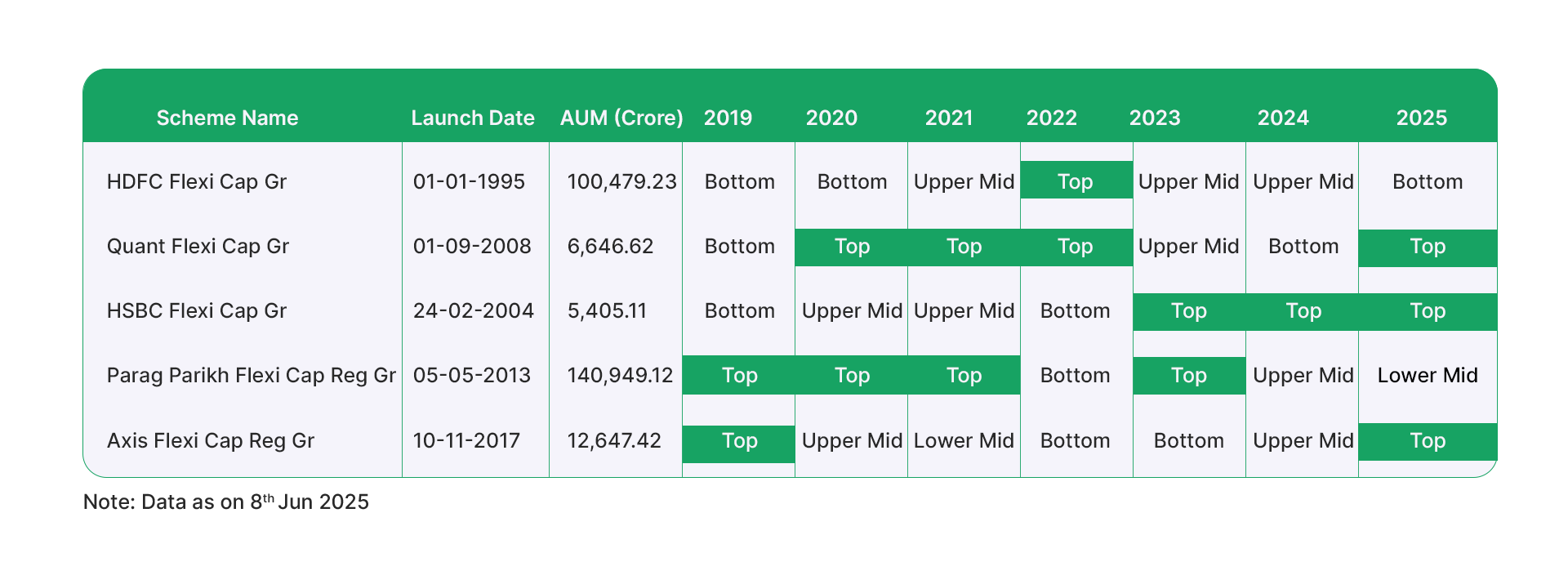
Here are the top performing mutual funds in the Flexi Cap category from 2019 to 2025.
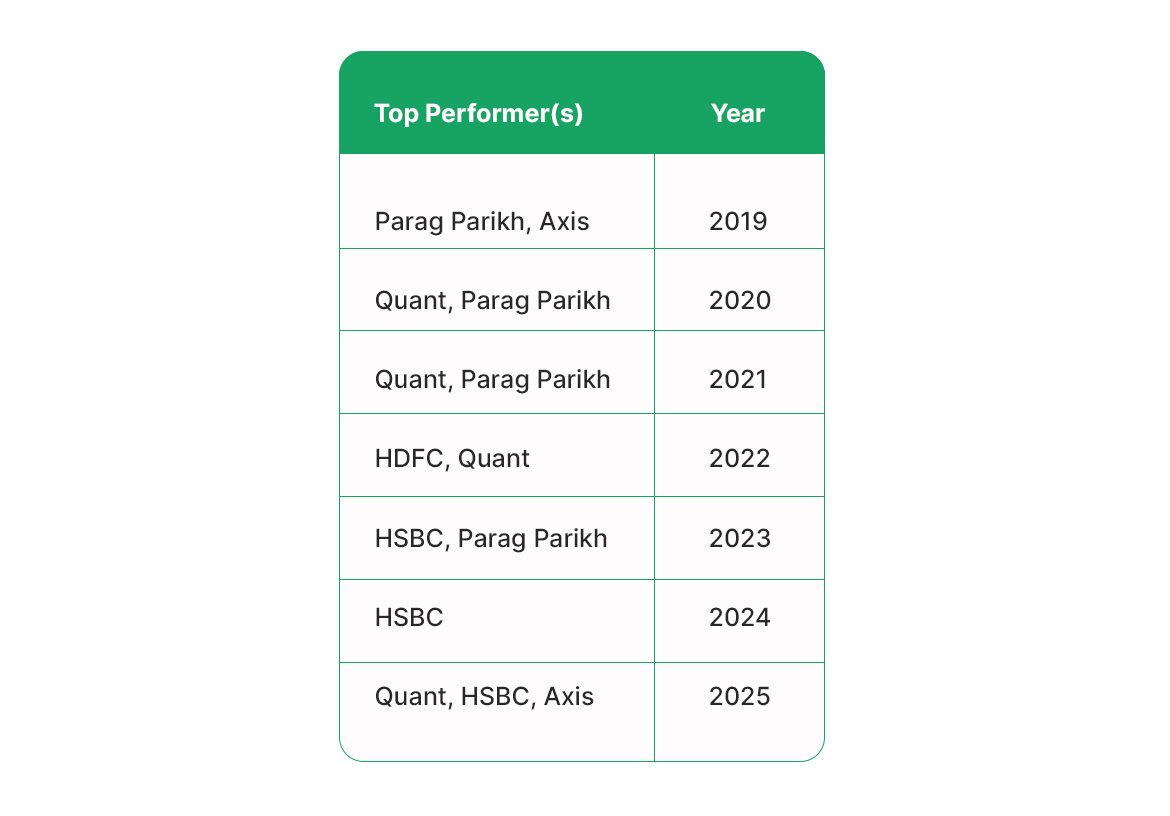
Look at that list. Almost every year, a new name or a different set of names shows up at the top.
Parag Parikh was on top in 2019, 2020, 2021. By 2022, it was gone from the top spot. HDFC and Quant took over. Then HSBC came out of nowhere in 2023 and stayed on top for two years. By 2025, three funds were sharing the number one position.
What does this mean? If you keep buying last year’s number one fund, you will constantly be switching. And you will never catch the next top fund before it gets there.
We spoke about this in Stop Chasing Last Year’s Top Mutual Funds – chasing past winners is a loop that never ends well.
So why does this keep happening? Two reasons. Let us start with the first one.
Reason 1 – Mean Reversion
Here is a simple truth. Extremely high returns are not normal. They are the exception.
When a fund delivers 40% in a year, do not expect that to happen again next year. It probably will not. The fund will likely deliver something closer to the average. That feels like failure. But it is just numbers returning to normal.
Think of it this way. A batsman scores 150 runs in one match. Do you expect another 150 in the next match? No.
You expect 40 or 50. That is not failure. That is just how performance works.
Same with mutual funds. Last year’s hero was often just having an exceptional year. When things return to normal, the fund looks like it is falling. But really, it is just coming back to earth.
But mean reversion is only one piece of the puzzle. Market cycles play an equally big role.
Reason 2 – Market Cycles Change
Different markets favour different strategies.
In a falling market, funds that play safe do well.
In a rising market, aggressive funds shine.
In some years, one sector goes up like crazy. Next year, that same sector falls.
The fund that won last year won because market conditions suited its strategy perfectly. When conditions change, a different type of fund wins.
That does not mean last year’s fund became bad. It means the market started asking a different question. Sharpe ratio and beta help measure how a fund behaves when market conditions change.
So mean reversion pulls extreme performers back to average. Market cycles keep shifting which strategy wins. What does this mean for you as an investor?
What This Means For You
Stop asking which fund is number one this year. That question will always lead you to disappointment.
Start asking whether your fund performs consistently across different market conditions.
A fund that is never number one but always stays in the top half is often better than a fund that hits number one one year and falls to the bottom the next.
When your fund drops from number one to number ten? Do nothing. That is normal.
When it stays at the bottom for two or three years in a row? Then it is time to take a closer look.
Conclusion
Top performing funds change every year because extreme returns do not last, and market conditions keep shifting.
Your fund falling from number one is not a crisis. It is normal.
Stop chasing last year’s winner. Start looking for funds that perform consistently across different market conditions.
Still unsure whether your fund sliding down the rankings is a red flag or just normal market behavior? Book a call with us to review your portfolio.
Disclaimer:
This article is for educational and informational purposes only and should not be construed as investment advice, investment recommendation, or solicitation to buy, sell, or hold any securities.
The views and opinions expressed are based on information believed to be reliable as on the date of publication. However, no representation or warranty is made regarding the accuracy, completeness, or adequacy of the information.
Investments in securities are subject to market risks. Readers should conduct their own research and consult their financial adviser before making any investment decisions.
SEBI Registration No.: INH000010858
Analyst Name: Gopi krishna Matcha